Reputation & Feedback Intelligence Engine
An automated feedback management system that analyzes customer sentiment and severity, routes feedback intelligently, escalates urgent complaints, and provides AI-drafted responses through a centralized multi-location dashboard.
The problem
The business struggled with inconsistent customer feedback collection, delayed awareness of negative reviews, and manual processes that treated minor complaints and severe issues alike. Managing feedback across multiple locations also lacked a centralized view, making it difficult to identify recurring customer problems, prioritize urgent complaints, and respond effectively.
Objective
To build an automated end-to-end feedback management system that collects customer feedback after completed visits, analyzes sentiment and severity, identifies repeat negative feedback, routes responses appropriately, alerts managers to urgent issues, and provides a centralized dashboard for monitoring feedback across multiple locations.
The solution
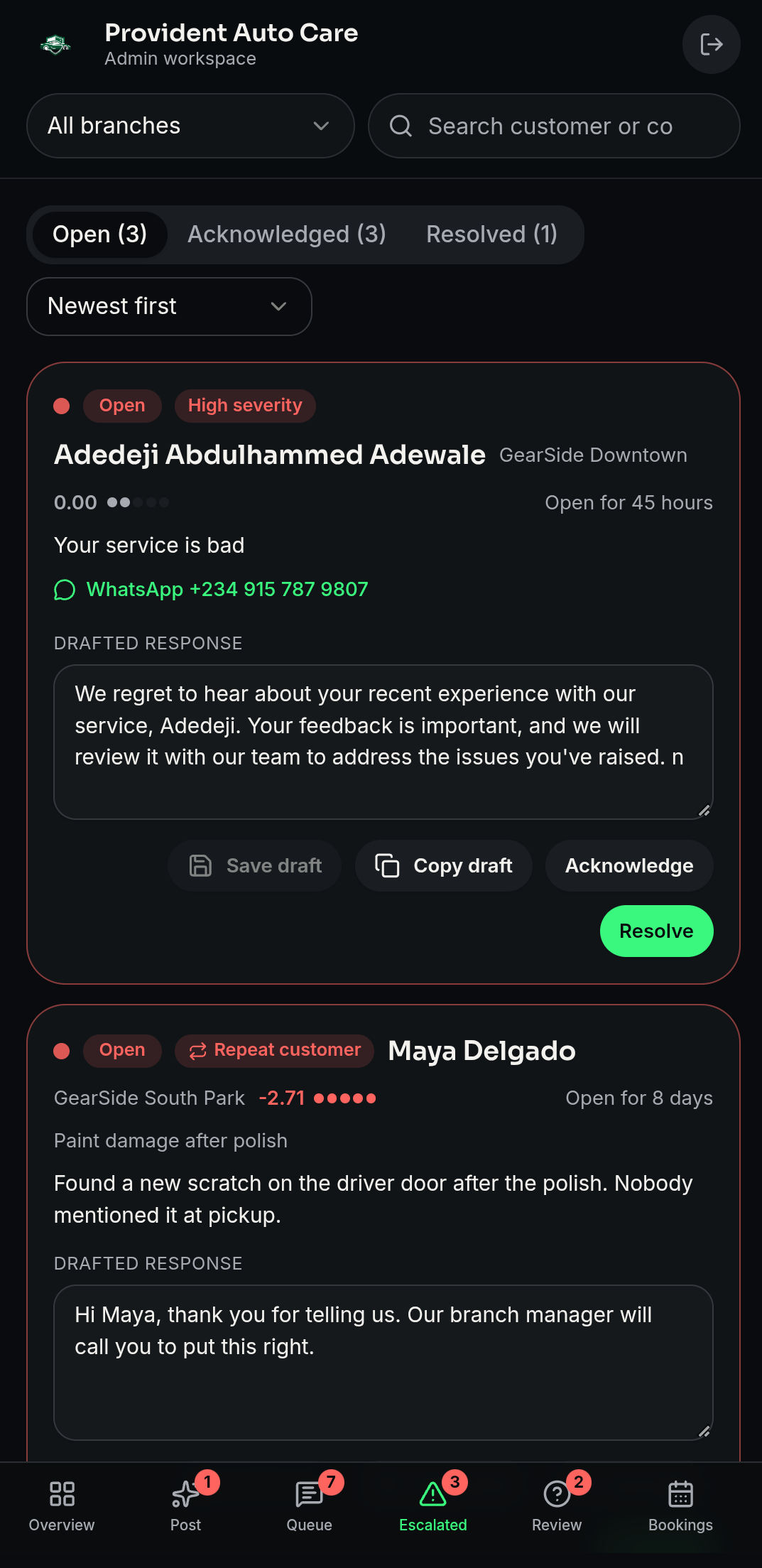
Built an automated feedback intelligence system using n8n, Supabase, and a centralized management dashboard. The system triggers feedback requests after completed services, uses AI to analyze sentiment and severity, checks customers’ previous negative feedback, and routes responses into appropriate queues. It generates personalized AI-drafted replies for negative feedback, escalates severe or repeated complaints to managers, and provides location-based visibility into feedback, routing decisions, and alert status. Human review remains in place before public reviews are posted or responses are sent to customers.
How the workflow works
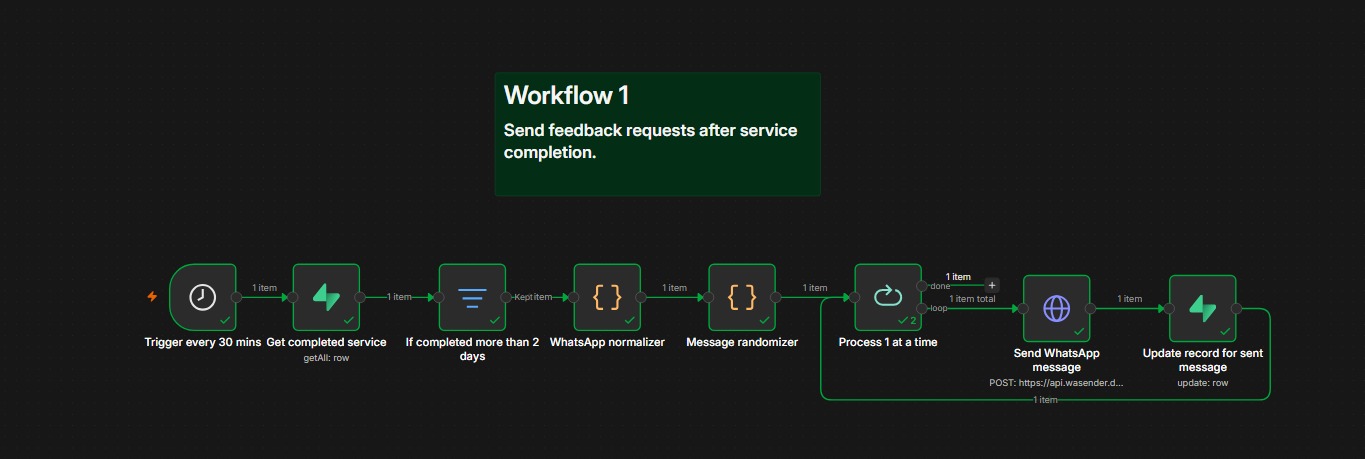
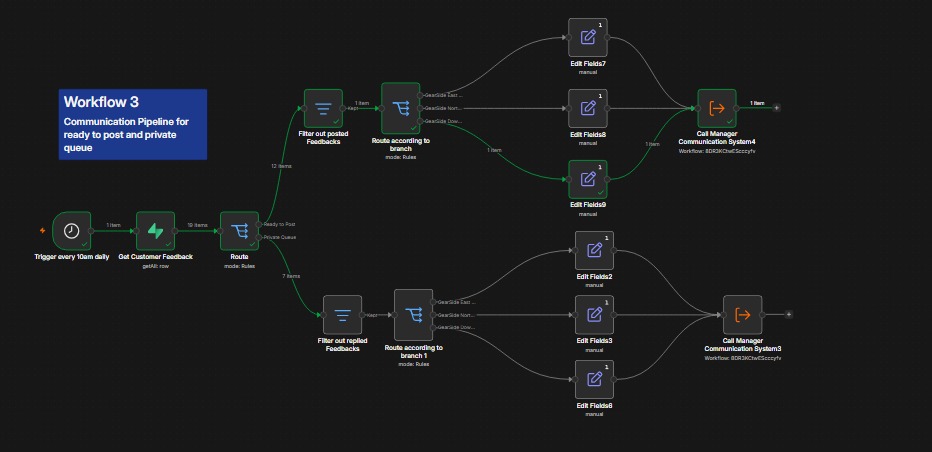
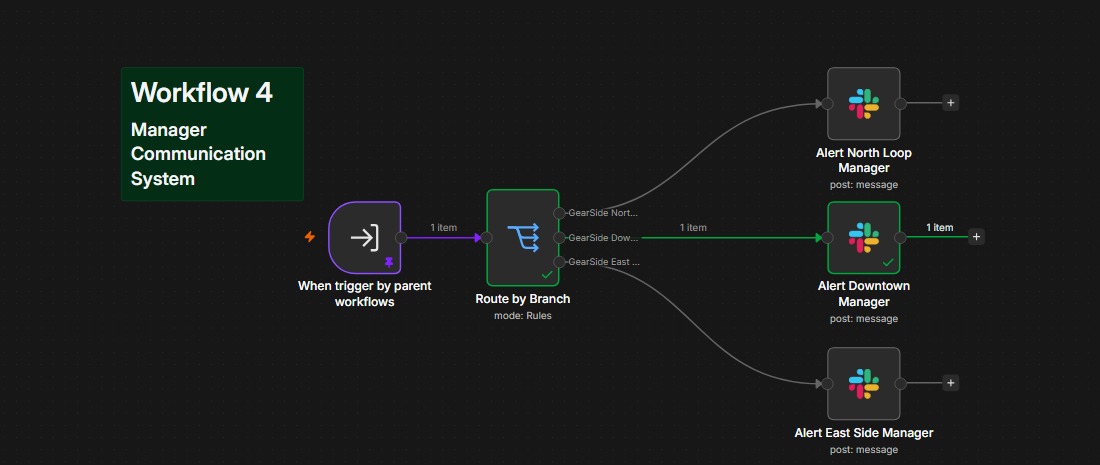
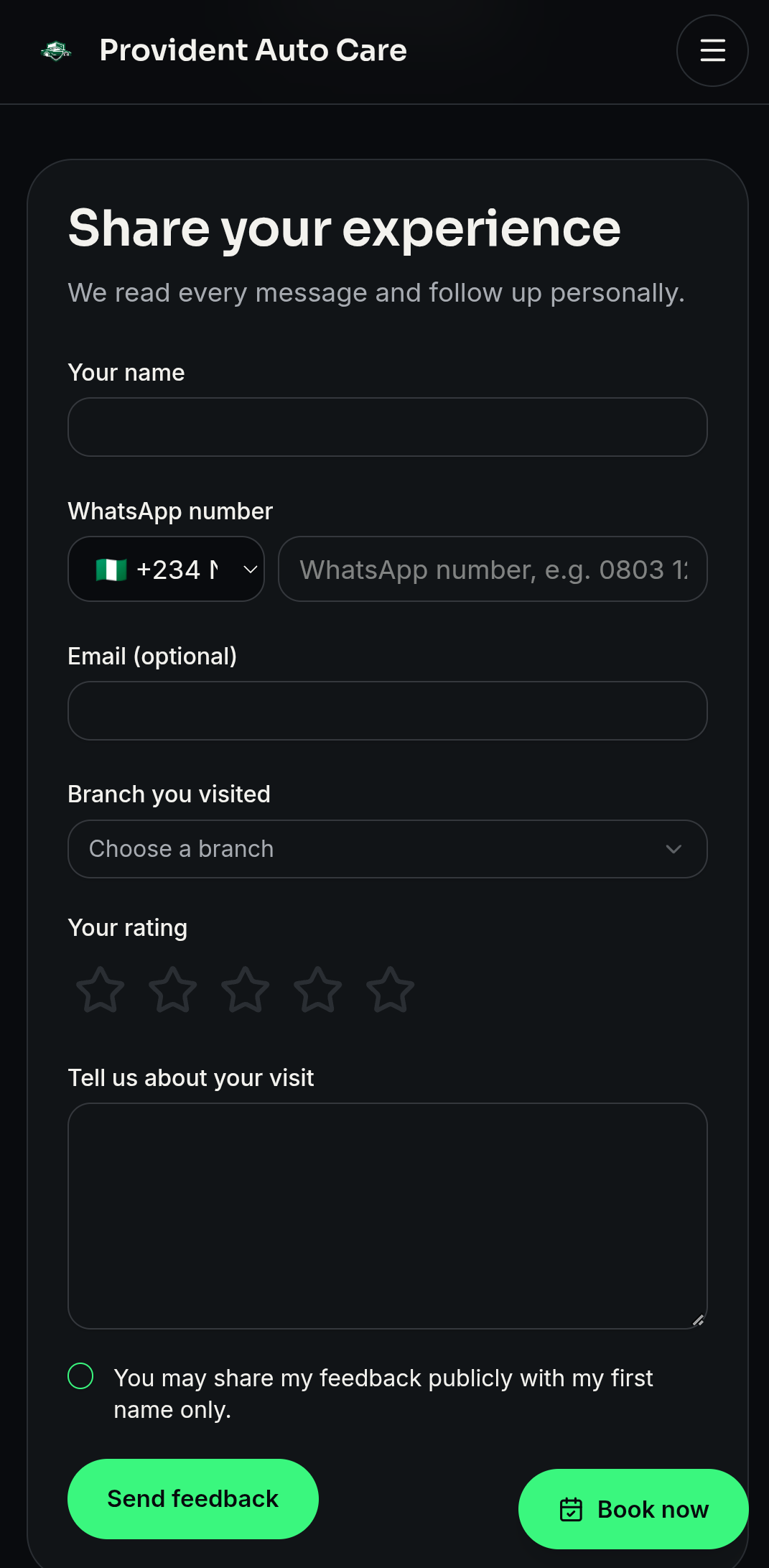
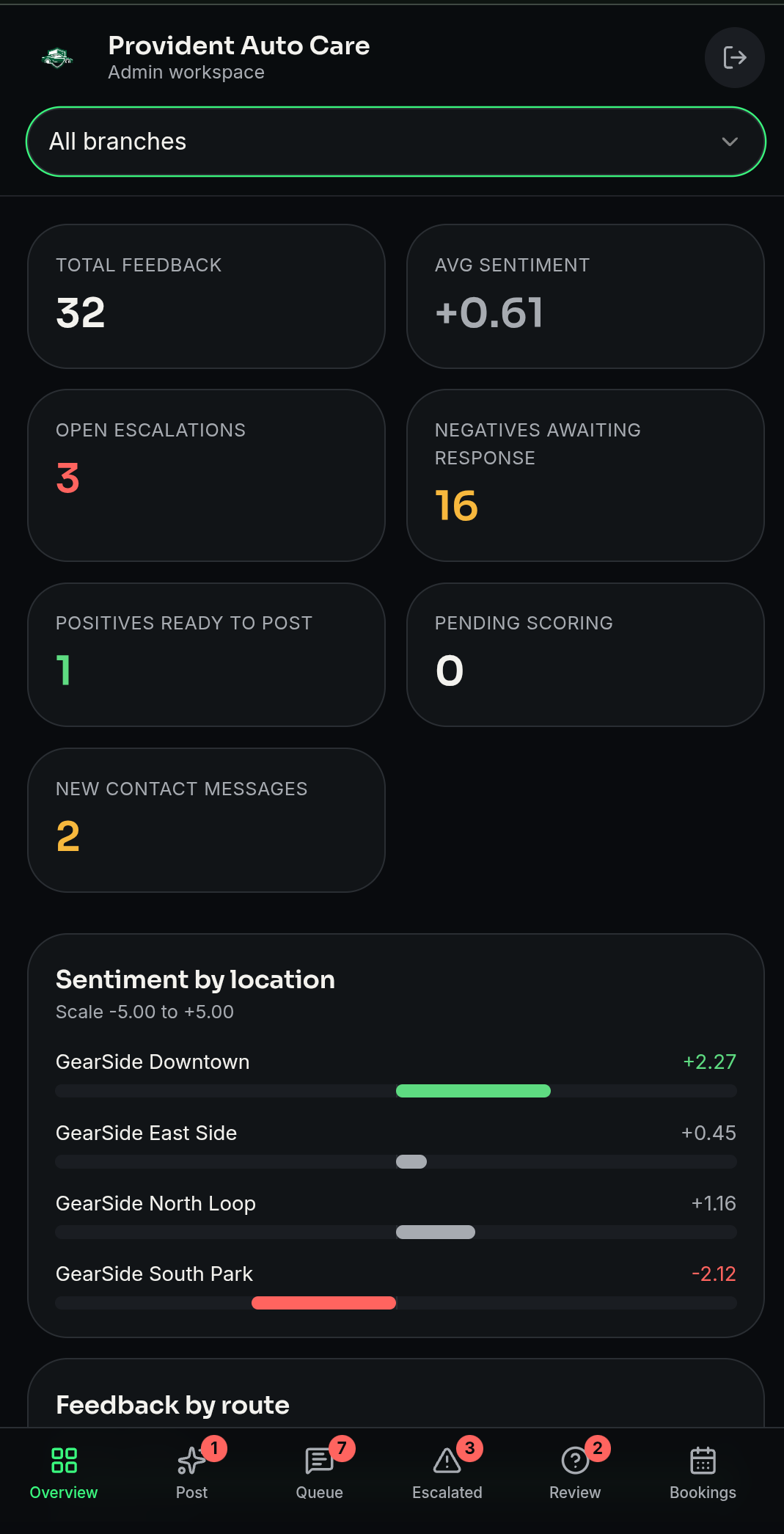
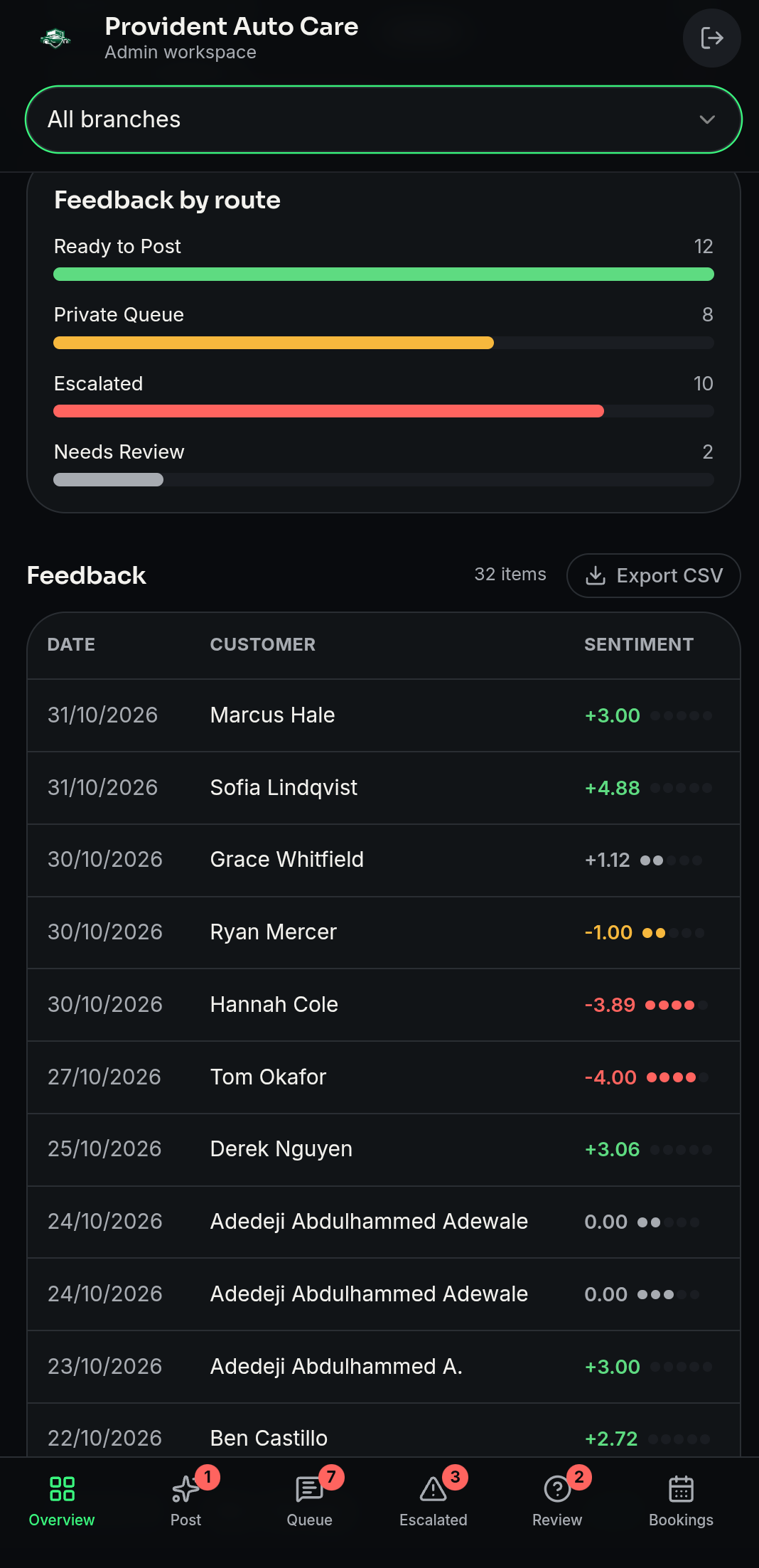
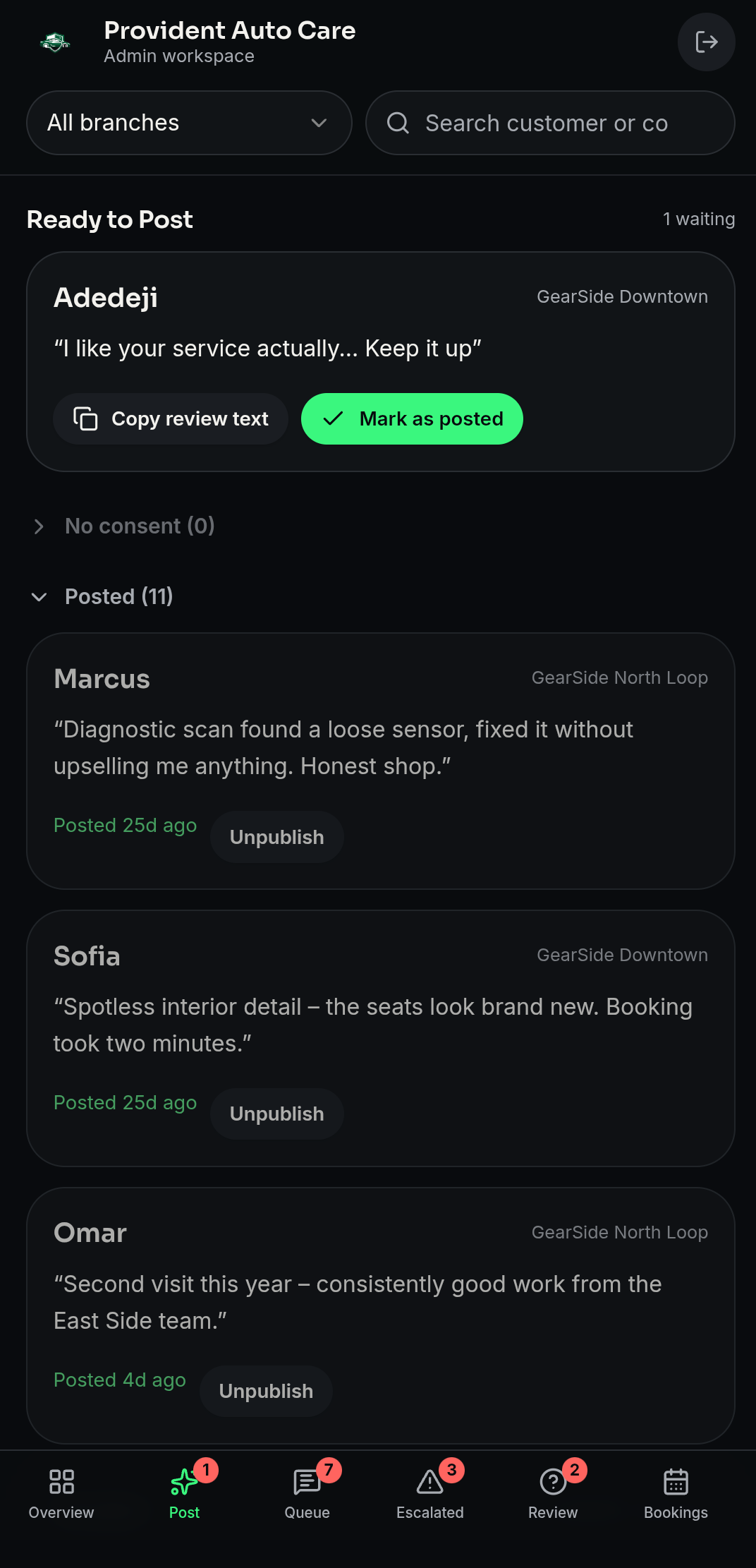
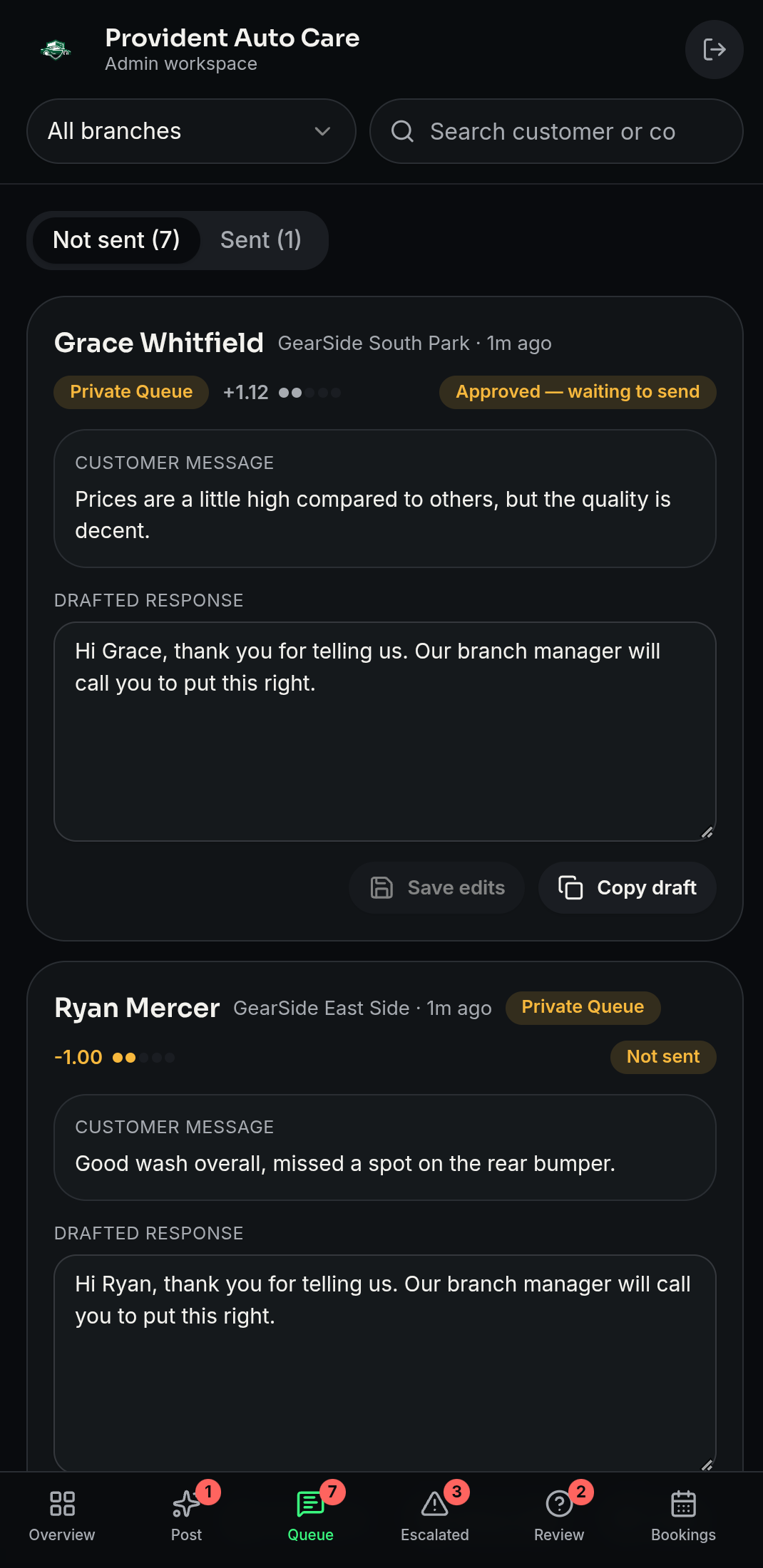
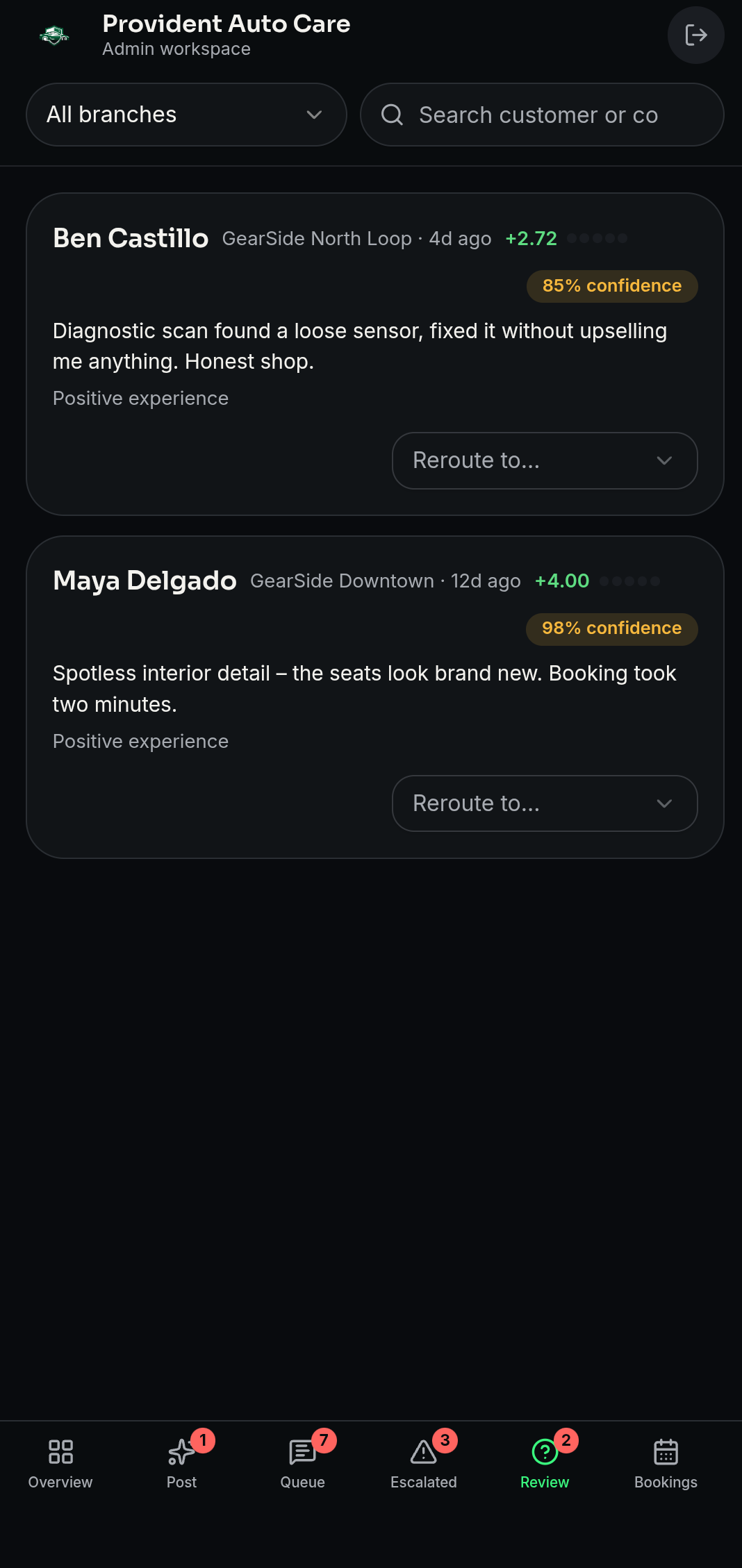
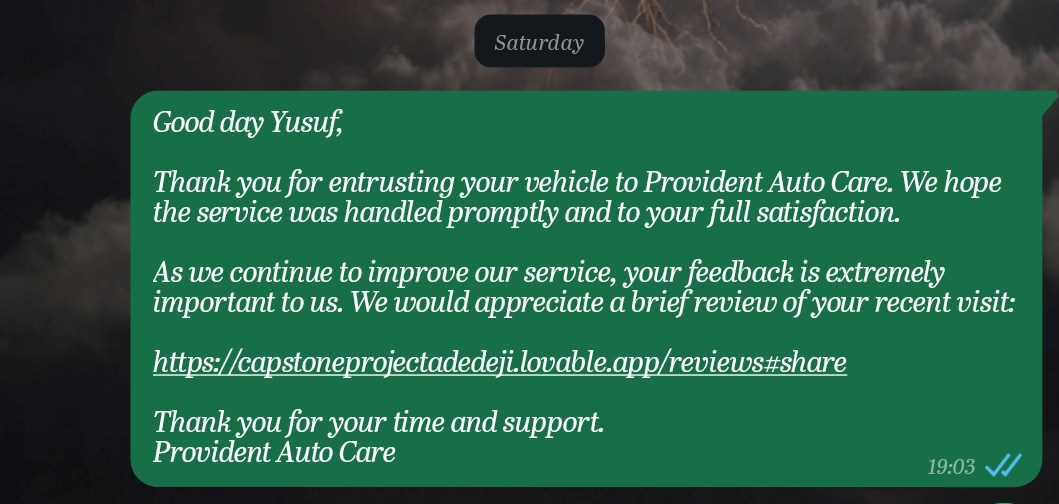
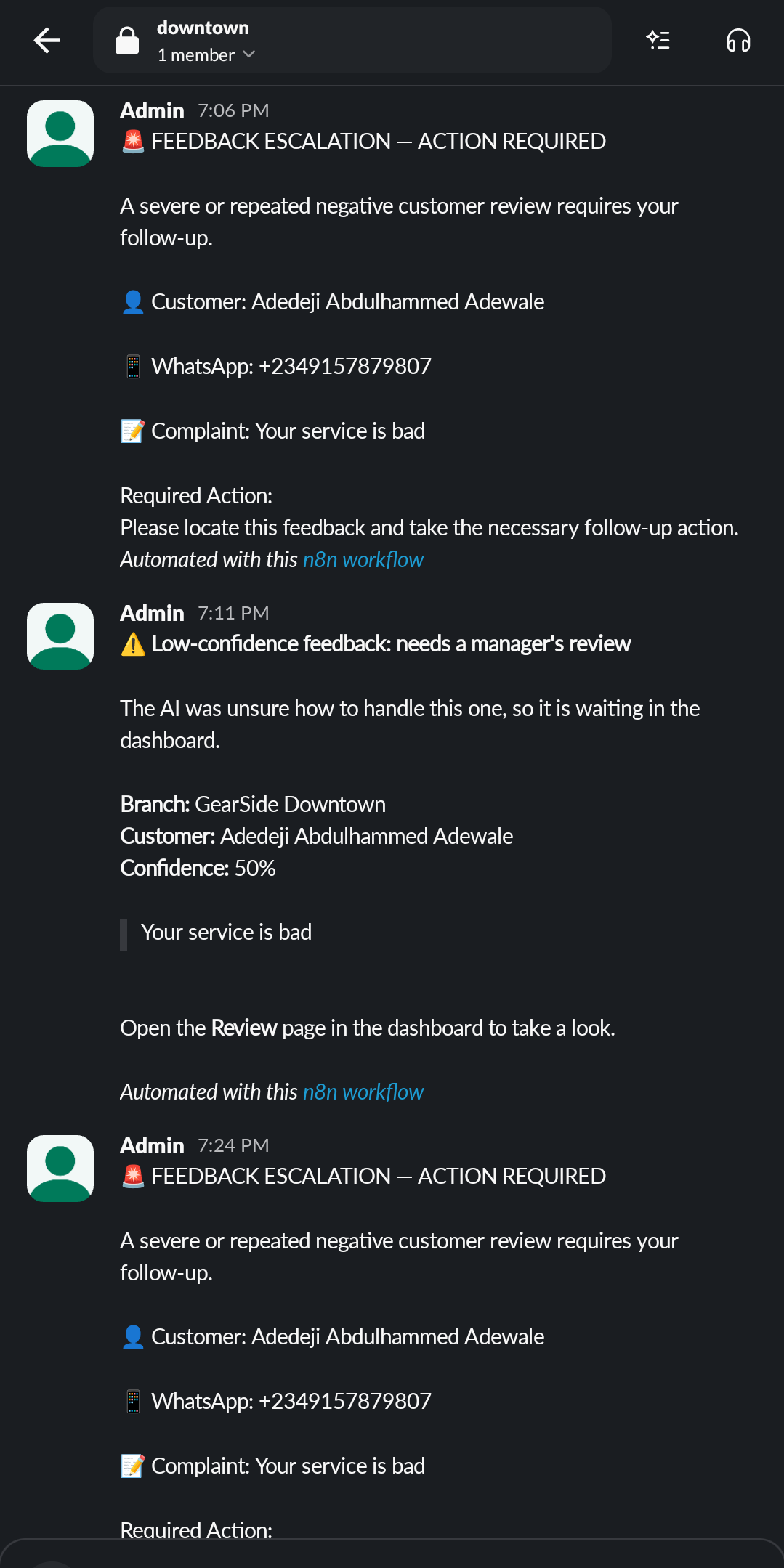
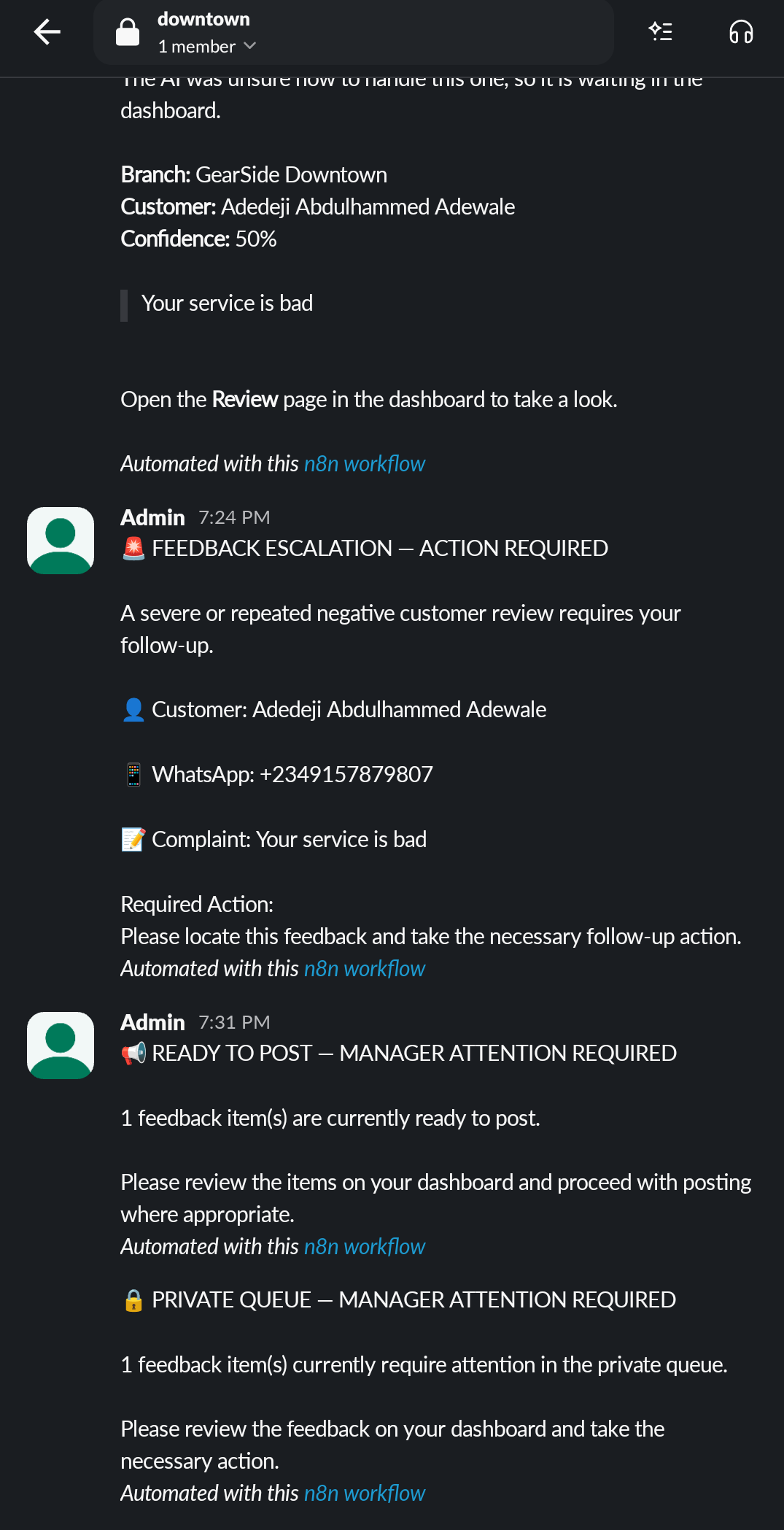
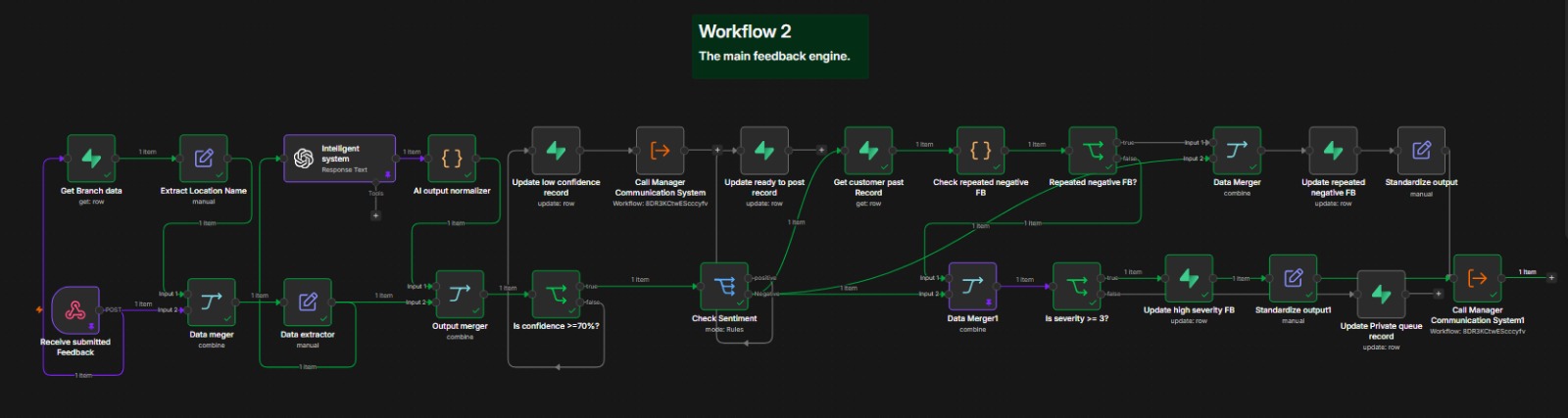
The workflow begins when a service is marked as completed, triggering an automated feedback request to the customer. When feedback is received, the AI analyzes the review, scores its sentiment, severity, and confidence, and generates a personalized draft reply for every review. The automation then evaluates the AI's output and checks the customer's history for previous negative feedback to determine the appropriate route. Positive feedback is moved to the queue for human-reviewed public posting. Negative feedback is directed to the private queue, while severe complaints and repeated negative feedback are escalated to management. Reviews with low confidence scores are also routed to the manager review queue for human assessment. Communication and notifications are handled through Slack. All feedback, scores, routing decisions, draft replies, and management alerts are tracked on a centralized dashboard, with feedback organized by location.
Key features
- Automated feedback requests triggered by service completion
- AI-powered sentiment analysis and scoring
- Severity and confidence scoring for customer reviews
- Personalized AI-drafted replies for every review
- Automated feedback routing based on scores and customer history
- Positive feedback queue for human-reviewed public posting
- Private queue for negative feedback
- Automatic escalation of severe and repeated negative feedback
- Low-confidence feedback routed for manager review
- Slack notifications and management communication
- Centralized dashboard for multi-location feedback monitoring
- Location-based feedback filtering and search
- Feedback and routing status tracking
- Management alert tracking and resolution monitoring
- Human review before publishing reviews or sending drafted replies
Tools
- n8n
- Supabase
- OpenAI API
- Slack
- Lovable
- APIs and Webhooks
Technologies
- Workflow Automation
- AArtificial Intelligence (AI) and Large Language Models (LLMs)
- Sentiment Analysis and Scoring
- REST APIs and Webhooks
- Event-Driven Automation
- Database Management
- Role-Based Access Control (RBAC)
- Real-Time Notifications
- Multi-Location Data Management
- Human-in-the-Loop Review
Implementation
The system was implemented using n8n to orchestrate automated workflows, Supabase to store and manage feedback data, and AI to analyze customer reviews and generate personalized draft replies. Conditional logic evaluates sentiment scores, severity, confidence levels, and customer feedback history to determine the appropriate routing. Slack handles notifications and management communication, while a centralized dashboard provides location-based feedback monitoring, review queues, and alert tracking. Human oversight is maintained for uncertain feedback, public review publishing, and customer responses.
Results
Automated the end-to-end customer feedback management process, from feedback requests to analysis and routing. Enabled AI-powered sentiment, severity, and confidence scoring to support more informed feedback handling. Implemented conditional routing to distinguish positive feedback, negative complaints, severe issues, repeat negative feedback, and low-confidence reviews. Generated personalized AI-drafted replies for every review, supporting more context-aware customer communication. Integrated Slack for management notifications and communication. Provided a centralized, location-based dashboard for monitoring feedback, review queues, routing decisions, and management alerts. Maintained human oversight for uncertain reviews, public review publishing, and customer responses.
Lessons learned
Learned to build end-to-end automated workflows using n8n, APIs, and webhooks. Gained experience integrating AI for sentiment analysis, scoring, and personalized reply generation. Understood how conditional logic and customer history drive feedback routing and escalation. Learned the importance of human oversight, reliable data management, and centralized monitoring.
More screens